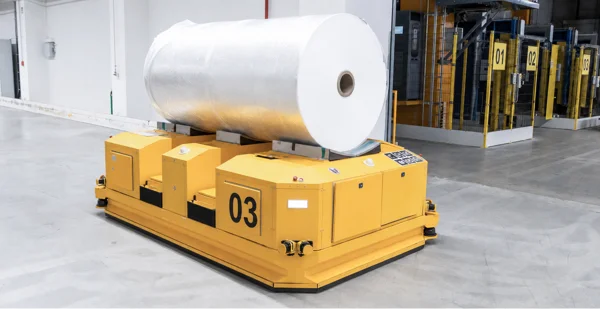
Heavy-duty automated guided vehicle (AGV)
A battery-powered AGV carries heavy materials between production and storage positions using a configured guidance and dispatch system.
View product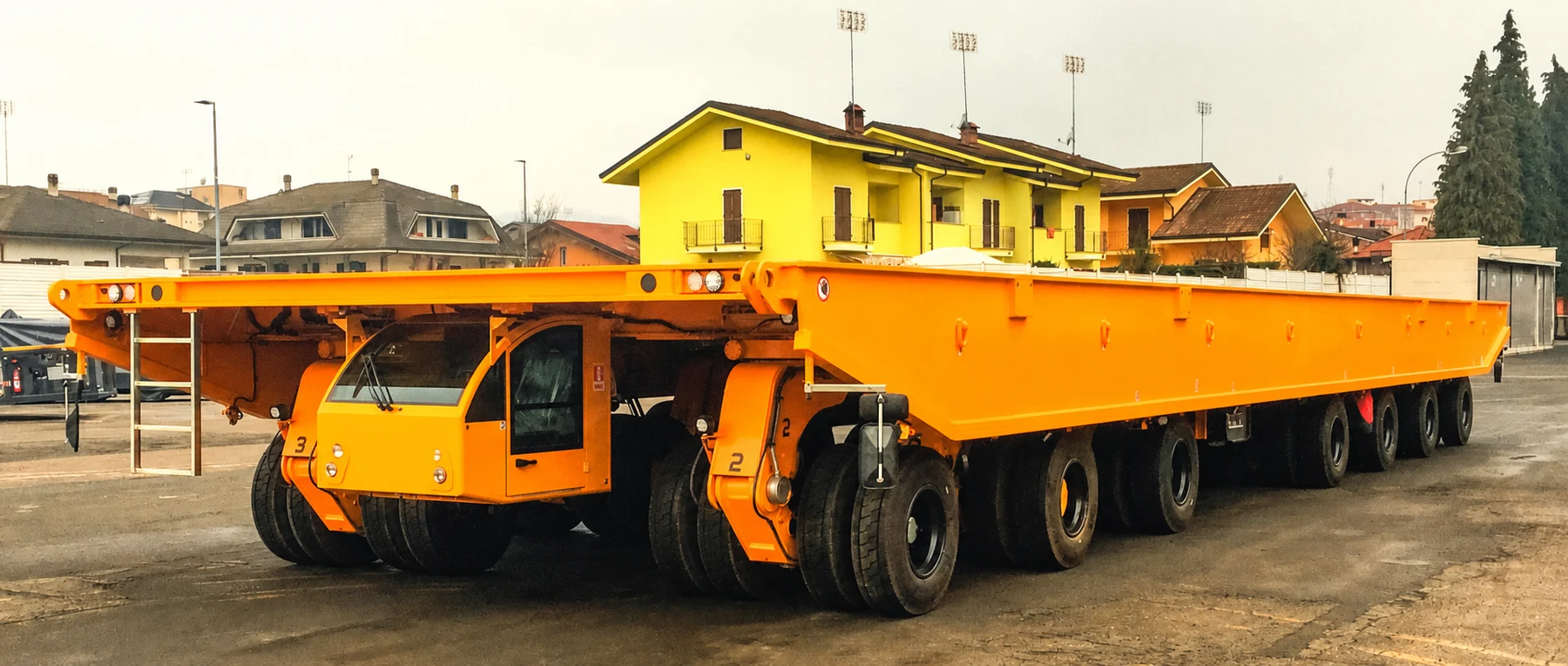 01 / 01
Product-family reference image. The attachment and configuration shown may differ from the selected model.
A wheeled hydraulic platform supports and transports large structures, with deck lifting to suit heavy-fabrication handovers.
Transfer ship sections, bridge components and large fabricated structures between fabrication, storage and assembly. Hydraulic deck movement helps align the platform with the agreed support and handover arrangement.
Hydraulic deck lifting with model-specific stroke.
Large supporting deck for oversize structures.
Multi-wheel chassis distributes the supported load through the running gear.
| Model | Rated capacity (t) | Lift stroke (mm) | Platform L × W (m) |
|---|---|---|---|
| MHV50 | 50 | 600 | 8 × 4 |
| MHV100 | 100 | 600 | 11.5 × 5.1 |
| MHV200 | 200 | 700 | 14.8 × 5.5 |
| MHV320 | 320 | 700 | 18 × 6 |
| MHV1000 | 1000 | 700 | 23 × 10.5 |
Ranges apply to different model configurations. Capacity, dimensions and options must be confirmed together for the intended duty.
Provide support-point loads, centre of gravity, route clearances and ground bearing information.
Hydraulic transport platform
A wheeled hydraulic platform supports and transports large structures, with deck lifting to suit heavy-fabrication handovers.
A multi-wheel chassis supports a hydraulically raised deck. Load reactions depend on support points, centre of gravity, deck height and the levelling arrangement; hydraulic lifting is distinct from securing the load for travel.
Transfers large fabricated structures between support stands and assembly stations where a deck-height adjustment assists handover. Ground capacity and the load’s permitted support locations are key inputs.
Before work, authorised personnel confirm the load and its centre of gravity, the permitted machine configuration, the route and receiving position. Complete the checks specified for the equipment, verify protective functions by the approved method and stop if a defect affects safe operation.
Align the platform below approved support points, raise evenly within the authorised stroke and verify full load support. Travel in the permitted deck position, then lower onto the receiving supports before withdrawal.
After the task, place the load on stable supports and leave the equipment in its prescribed safe state. Record faults and abnormal events. Maintenance or jam clearance requires secure isolation of relevant energy, including stored hydraulic, pneumatic and gravitational energy.
Never work beneath an elevated deck or load supported only by hydraulic pressure. Use the manufacturer’s positive supports and isolate stored energy for maintenance; check leaks without exposing the body to pressurised fluid.
Inspection frequency, wear/discard criteria, lubrication, brake adjustment and replacement parts follow the supplied instructions and applicable local requirements. Only competent personnel may maintain the equipment; return to service follows the prescribed checks.
This is an equipment-selection and operating-principle overview, not a complete operator manual, lift plan or certificate. Verify rated load, duty, geometry, environment and protective functions against the nameplate, approved drawings and delivered instructions. Do not combine separate series maxima into one promised configuration.
Requirements follow the destination and installation, not the website language. China: determine the applicable GB/T references and statutory equipment obligations. EAEU destinations: check the applicable TR CU/EAEU regulations, amendments and conformity documents. English-speaking markets: select the relevant national rules; US OSHA and UK HSE references are not universal law. EU projects require their own applicable conformity assessment.
References checked on 17 September 2026. Product-specific facts come from the retained supplier material. Standards links confirm official editions and scopes; full paid clauses have not been audited. Public regulator guidance and manufacturer technical material corroborate general workflows, not certification or specifications of this product.
Tell us your load, workspace and operating requirements.
A battery-powered AGV carries heavy materials between production and storage positions using a configured guidance and dispatch system.
View product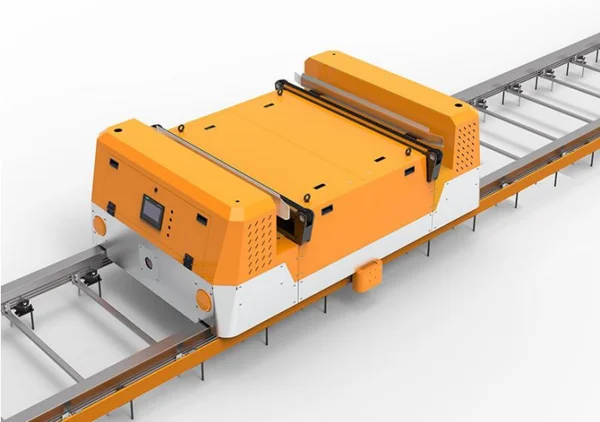
A rail guided vehicle transfers heavy loads along a fixed track between factory workstations and warehouse handover points.
View product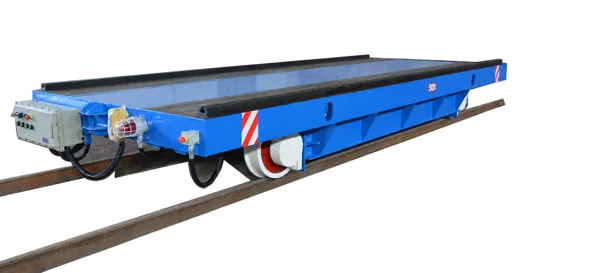
An electric rail transfer cart carries parts and production loads along fixed workshop or yard tracks.
View product