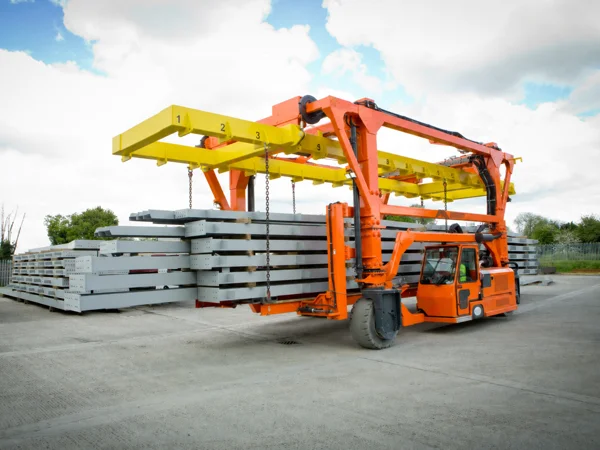
Electric straddle carrier
A battery-electric straddle carrier moves containers and, with a suitable attachment, precast components around industrial yards.
View product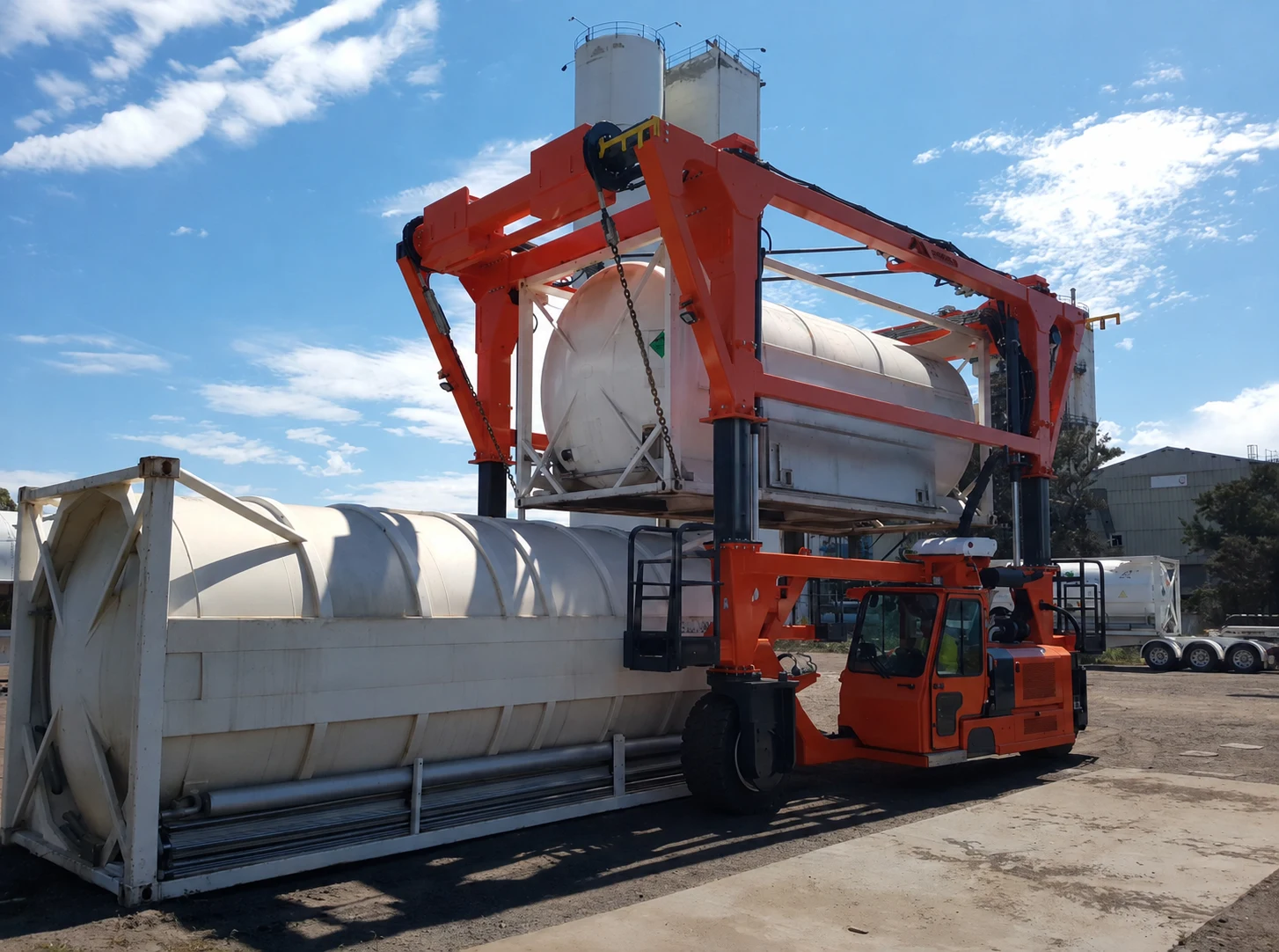 01 / 01
Product-family reference image. The attachment and configuration shown may differ from the selected model.
A diesel-powered straddle carrier lifts and transports containers within yards, depots and industrial loading areas.
Bring the machine over a container, lift it within the portal frame and carry it to the next loading position. This arrangement connects storage lanes, truck handover points and tank-container handling areas.
Diesel power supports yard travel without a trailing supply cable.
Hydraulic lifting works with the selected container attachment.
Multiple steering modes and cab control; remote control is an optional configuration.
| Model | Rated capacity (t) | Clear inside width (mm) |
|---|---|---|
| MST3531 | 35 | 3100 |
| MST6037 | 60 | 3750 |
| MST8037 | 80 | 3750 |
Ranges apply to different model configurations. Capacity, dimensions and options must be confirmed together for the intended duty.
Confirm container type, loaded weight, available lane width, pavement bearing capacity and required lifting clearance.
Diesel straddle carrier
A diesel-powered straddle carrier lifts and transports containers within yards, depots and industrial loading areas.
The open portal straddles the load, while the lifting system and selected attachment raise it inside the frame. Traction, steering, braking and lifting must be considered together for a complete handling cycle.
Connects storage lanes and truck handover positions in industrial yards. Container work requires matching attachment geometry and load data; precast or other non-container loads require their own approved lifting fixture.
Before work, authorised personnel confirm the load and its centre of gravity, the permitted machine configuration, the route and receiving position. Complete the checks specified for the equipment, verify protective functions by the approved method and stop if a defect affects safe operation.
Approach squarely, verify the attachment is correctly engaged and test load support before leaving the pick-up point. Carry along the authorised route and fully support the load at the destination before unlocking the attachment.
After the task, place the load on stable supports and leave the equipment in its prescribed safe state. Record faults and abnormal events. Maintenance or jam clearance requires secure isolation of relevant energy, including stored hydraulic, pneumatic and gravitational energy.
Maintain visibility and separation from pedestrians, particularly inside the frame and at blind corners. Verify route bearing capacity and permitted operating modes; lifting ratings do not authorise public-road travel or unplanned stacking heights.
Inspection frequency, wear/discard criteria, lubrication, brake adjustment and replacement parts follow the supplied instructions and applicable local requirements. Only competent personnel may maintain the equipment; return to service follows the prescribed checks.
This is an equipment-selection and operating-principle overview, not a complete operator manual, lift plan or certificate. Verify rated load, duty, geometry, environment and protective functions against the nameplate, approved drawings and delivered instructions. Do not combine separate series maxima into one promised configuration.
Requirements follow the destination and installation, not the website language. China: determine the applicable GB/T references and statutory equipment obligations. EAEU destinations: check the applicable TR CU/EAEU regulations, amendments and conformity documents. English-speaking markets: select the relevant national rules; US OSHA and UK HSE references are not universal law. EU projects require their own applicable conformity assessment.
References checked on 17 September 2026. Product-specific facts come from the retained supplier material. Standards links confirm official editions and scopes; full paid clauses have not been audited. Public regulator guidance and manufacturer technical material corroborate general workflows, not certification or specifications of this product.
Tell us your load, workspace and operating requirements.
A battery-electric straddle carrier moves containers and, with a suitable attachment, precast components around industrial yards.
View product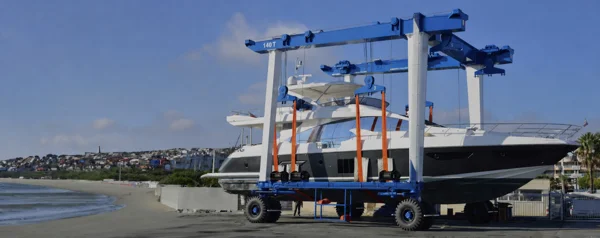
A mobile boat hoist lifts vessels with slings and transfers them between launch areas, maintenance positions and dry storage.
View product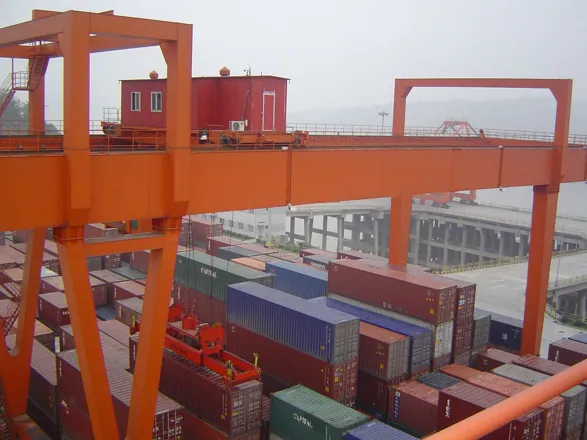
A rail-mounted gantry moves containers across a defined container-yard working area.
View product